Tuesday, February 17, 2015

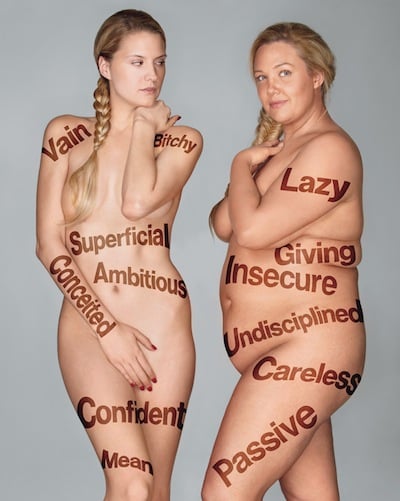
Being fat on the internet...

I couldn't've said it better myself, so I won't try! If you care about who I am, you'll read this:
---

The Most Important Match Question on OkCupid

Fat Girls, Desire, Online Dating, and “Preferences”


A few weeks ago, online dating website OkCupid announced that paying users on the site could now “search” their matches by the answers they gave to the site’s user-generated match questions. These questions are as varied as “Have you ever had sex with a person within the first hour of meeting them?” and “Do you like the taste of beer” and “Do you often find yourself wanting to chuck it all and go live on a sailboat?” There is a lot of random shit people on OkCupid want to know about the people they might one-day marry/fuck/kill. (Or, you know, have an awkward date with and then never speak to again).
I’ve been waiting for OKC to allow users to search by match question answers for a long, long time. I used to spend hours manually scrolling through each potential match’s questions until I found out how they answered one question in particular. It goes like this:
Q: If one of your potential matches were overweight, would that be a dealbreaker?
A:
-Yes, even if they were slightly overweight.
-Yes, but only if they were obese.
-No.
-No, in fact I prefer overweight people.
As a fat woman, it is basically imperative to me that any of my potential matches answer “No” to this question if I’m going to seriously consider meeting them IRL. What’s the fucking point, otherwise? (Warning: heartbreak and rejection ahead.)

Almost as soon as OKC announced the change in search options, people on the interwebz began to consider what the change meant in relation to questions on OKC that address racial preferences in dating. Rehashing older discussions about online dating and race, Slate.com’s Reihan Salam penned a piece titled “Is it Racist to Date Only people of Your Own Race? Yes.” He concludes the piece,
To be sure, dating is about more than the sharing of bread, and OkCupid users who express strong racial preferences may well be doing the world a favor by being open and honest about their wants. But I don’t think it’s too much to ask those who do express such preferences, and those who live them in practice, to reflect on them, and on how there might be more to fighting racism than voting ‘the right way.’
I agree with Salam’s assessment that fighting racism, and other forms of oppression and discrimination, isn’t just about formal manifestations of equality like voting, but is also about our hearts, minds, and even what we do with our genitals. Far from being innocuous and purely personal “preferences,” who we date, love, live with, befriend, and fuck is extremely meaningful for how we organize social power, hierarchy, and affiliation. (This isn’t Rocket Science, folks.)
And that is part of why discussions about dating are so convoluted; desire and attraction cut to the heart of deeper, subterranean social meanings, ones we’re not fully aware of or able to negotiate freely and rationally. Who we desire to be, and to love, isn’t just a matter of individualist private choice in the way that the ideology of American free-market political liberalism leads us to believe. As much as online dating can feel like online shopping, neither activity is devoid of political meaning. Both activities are about creating human relationships situated within larger sociopolitical and economic systems that are beyond our control as mere individuals.
The links between a conservative political agenda and a notion of apolitical personal blame and responsibility is particularly salient when it comes to body size. As the report “Weighty Concerns” by Samantha Kwan and Mary Nell Trautner notes,
In Western cultures with an ideology of individualism, this belief that we can control our destiny, including our bodies, is deeply ingrained. Sizeist attitudes are particularly embedded in individualistic cultures such as the U.S. Work by social psychologist Bernard Weiner and his colleagues shows that fat stigmatization is more likely when individuals assign individual responsibility and blame to fat people, and Christian Crandall and his colleagues’ research further shows that fatism correlates with belief in a just world, the Protestant work ethic, and conservative political ideology (56).
Being fat is, in this frame of thought, an undeniable visible marker of an individual’s failure to live up to the demands of Western political ideologies of personal responsibility and self-empowerment.
While we all have both explicit and hidden (even to ourselves) preferences about who we date, the insistence that those preferences are merely personal, entirely apolitical, or that they are, somehow, our God-given right, belongs to the same genre of ideology as other salient conservative political myths that attempt to decontextualize individuals from their social surroundings; myths like the welfare queen and the pro-choicer who just loves murdering babies. To say that dating “preferences” lack political meaning, that they cannot be harmful because the intent of the individuals expressing the preference is not to cause harm entirely misses the point, which is that systems of oppression are systems and ones that replicate themselves through us. That is, we “inherit” these “preferences” and it is our job, if we are committed to progressive social change, to “work” on those inheritances so that our desires, and consequent “choices” align with the social world we want to pass on to others in the future. (Be the change, y’all. BE the change.)
Still, Salam is right to point out in his article that people who are explicitly and openly discriminatory in their dating preferences may be doing the rest of us a favor by letting us know. I was really pleased when OKC announced the change in search options, in part, because I do want to check to see if my potential matches have publicly expressed dating preferences such as “I strongly prefer to date only people of my own race.” Overt, public racists like that have, quite simply, #gottogo. People who think that expressing a racial “preference” for their match is just a matter of personal choice are extremely unlikely to be a good match for me.

To be honest, people who have high match percentages with me generally fit a certain profile: they like to read a lot; they’re politically leftist; they either went to college or are in college now; they probably like art, coffee, cooking, wine, or whiskey. They might write poetry or paint. They’re mostly young-ish, urban-dwelling, hipster-y types. Many of them are queer/of color/feminist. And they almost never overtly express racist/sexist/classist/homophobic sentiments in how they answer their match questions. And that’s rad for me.
But ask them the question about “obesity” and it’s fucking no holds barred. Time and time again, I’ll be excited about some Proust-reading feminist bisexual carpenter or some effeminate philosophy graduate student barista only to have my hopes dashed on the rocks of overt and unabashed sizeism. No fatties. As in, I won’t even consider dating someone who has a BMI of 30 or greater (the technical definitions of obese and dealbreaker).
The same people who are seemingly able to make the political connections (or at least try to make them, who want to make them) between desire, power, and race/class/sexuality/gender unabashedly refuse to do so when it comes to body size. And I never fail to feel surprised and disappointed about this. It doesn’t matter how many times it happens, it defies my expectations.

By marking “No” to the question “If one of your potential matches were overweight, would that be a dealbreaker?” you are not saying “I love all fat people and want to fuck/marry all of them.” You’re just saying, “I’d consider going on a date with one single individual ‘obese’ person sometime in my life before I die. It isn’t out of the question that I might find a fat person interesting/sexy/romantically viable at some point, someday.” And, from what we know about how fluid human sexuality actually is, this seems like a pretty reasonable assumption that this will, indeed, happen, like, at least once.
But, admitting that you’re into a fattie, well, that’s not something most people want to do, because admitting that fact is incredibly stigmatizing. You might, like, get fat by association, or something. Your social prestige will plummet like tech stocks in 2000. Especially if you’re a dude.
I first learned this in the fourth grade when I asked out my first crush, Jake, on Valentine’s Day. Jake and I had been talking on the phone everyday after school for several months, doing things like playing our favorite songs for one another. He, like, GOT fourth grade me, or whatever. When I finally worked up the courage to ask him to be my boyfriend, officially, publicly, he told me he’d call me back with his decision. Jake called me back after a few minutes to tell me that he had consulted with his older brother, showing him my yearbook photo, and that his older brother had advised him against us going out, officially, publicly. It was a lesson on gender, desire, and social status for both of us. And, while the ins-and-outs of negotiating gender, desire, and social status in dating have become more nuanced as I’ve aged, in a lot of ways it feels like nothing has really changed. The details might be different, but being a fat girl who (sometimes) dates dudes is a lot like being stuck in the fourth grade, forever. (Total bummmmmer.)

What’s fascinating, though, is that I sometimes receive messages from people expressing interest in me and when I look for the answer to the “obesity” question they have said they won’t date an obese person. This puzzles me a little, but I have a feeling I know what is probably happening. They don’t fucking see me as obese. Obese is bad, but they think I’m cool/sexy/interesting, so I can’t possibly be that.
This dynamic was recently driven home for me when I foolishly searched for the answer to this question as I was Internet stalking a real life friend/crush/hottie. He too had marked, “Yes, but only if they were obese.” I contacted him to tell him I had a hard time understanding how we could be friends and/or political allies given his answer to the question despite the many other ways we were clearly friends and political allies around issues of race/gender/sexuality/class. (I know, I know. Why bother? Glutton for punishment.)
His response? (WAIT FOR IT….)
“I don’t think of you as obese.”
Can you feel the harsh, hot sands of oppression brushing over you? As the fat girl dating monologue on Louie recently addressed, the fucking worst thing you can tell a fat girl is that she isn’t fat. Just don’t. PleasefortheloveofYahweh.
“I don’t think of you as fat/of color/gay/disabled/a woman” is one of the oldest fucking tricks in the book of false universalisms, right? The logic is this: X form of difference is treated as something bad/abnormal/undesirable/gross in society. I don’t think of you as bad/abnormal/undesirable/gross, therefore I do not think of you as X. X remains squarely unchallenged as a stigmatized/minoritized identity and the power hierarchy replicates itself, but you get a free pass as an individual (which is supposed to make you feel special and good). Difference is erased and assimilated back into the idealized norm of white/straight/male, etc.
In this particular case, the use of the term “obese” causes some real trouble. There is simply no way to make the term “obese” sound like it isn’t the worst fucking thing on earth in our contemporary cultural climate because it is a medicalized term meant to signify abnormality, disease, and unhealthiness. We see “obese” people as immoral, unhealthy, lazy, gross because that is part of the built-in definition of the word. Who would want to date someone who is all of those icky things? You could basically re-write the answer “Yes, but only if they were obese” to read “Yes, but only if they were abnormal, diseased, unhealthy, lazy, gross, and immoral.” You can’t really blame people for clicking that answer when you put it like that, can you? (Well, yes, I can, but I expect people to be less fucking idiotic. This is the root of all my disappointments in life, I’m aware.)
As my friend/crush/hottie explained to me, he thinks of “obese” as a health determination, but he doesn’t think of me as unhealthy. But the thing is, I’m still fucking obese. “Morbidly” so by BMI measures. And I have no interest in pretending that I’m not, even though I also consider myself to be reasonably ethical, healthy, ambitious, and appealing. And that’s what I told my friend before I abruptly ended our conversation to go to the gym. (Ohhhh, the irony. Sort of.)

What makes the question about obesity as a dealbreaker such a good barometer for my potential matches is that it’s a really good measure of whether a match GETS IT, or predictably, disappointingly, boringly doesn’t. By “it,” I mean roughly whether they get how the personal and political are intertwined when it comes to love/dating/sex and bodies/body size, whether they want to get it, whether they’re even trying.
Besides all the obvious political connections to be made concerning the overlap of sizeism and other systems of oppression, like racism, colonialism, and classism, on the more “personal” level, I want to know they “get it” because I need to know that anyone I’m going to be involved with is going to come to bat for me as a fat person. Are they prepared to “come out” as fat girl lover/fucker? Are they prepared to deal with street harassment if we go out in public together? Are they willing to fend off the idea that they’re settling for me? If they’re a dude, in particular, is their masculinity fucking secure enough to handle this jelly and all its social significance? Will they help me navigate a social world in which my body opens me up to unique forms of both fetishization and objectification and sexual violence and abuse? Can they handle the criticism they might receive from their friends, their parents, and society as a whole?
I, frankly, have no time to waste on dating people who aren’t down to rumble with me around this issue on the daily, because this shit is part of my daily reality. And, that’s what people do when they care for each other: they show up, they speak up, they fight for you. They stand by you. Sadly, it seems, there are a lot of people who just can’t hang, not because they couldn’t, in theory, but because they don’t even want to try. They “prefer” not to.

This is not an essay I ever wanted to write. In fact, I’ve been actively avoiding writing this essay for weeks and passively avoiding writing it for years. There is nothing more unappealing than being a bitter fat girl in our culture; this is made abundantly clear to me every time a well-meaning friend tells me to be “more confident” or to “lower my standards” or when people explain to me that there is nothing different about my experience of love/dating/sex than a thin person’s. This shit is hard for everyone, they reason. And they’re right: it is hard for everyone, just not in the same ways and not with the same social meanings.
It’s been made even more clear that I shouldn’t be writing this essay by the way that fat girls are silently pitied or cruelly mocked as the butt of the joke in popular media, but never, ever get to tell the truth about our own experiences in way that feels complicated, nuanced, and authentic to us.
And it is made clear by the way that talking about fat, and being fat, especially on the Internet, opens one up to some of the most harsh and degrading backlash imaginable. It’s made clear by the way I can never read the comments section on any article about fat or fatness without feeling like I want to die. It was for this reason that my mother expressed fear when I told her I was writing this essay; could I handle the responses I would get? she worried. Well, Mom, I’m afraid, too.
Ultimately, that’s why I had to write this essay, the one I didn’t want to write, the one I’ve been avoiding; the cost of not writing it, of letting other people narrate my experience for me using words and storylines that feel alien and alienating, became too great.
I’m a bitter fat girl. And I have good reason to be. Fuck me, date me, love me, anyway. Prove to me you’ve got what it takes. Show up for me, show up for the struggle.

Lisa C. Knisely Published on . All rights reserved by the author.


Tuesday, February 10, 2015

Why I can’t be an advocate.

I have a wealth of experiences, a gift for language and insight, and an engaging speaking mannerism.

I am a woman described by professionals in the industry as someone who “must be listened to."

I am a force to be reckoned with when prompted with questions regarding change and identifying the gap in services offered.

But along with that, I am a single mother, on disability, hardly making financial ends meet and not making a single dream for myself a reality.

Speaking at a National conference on homelessness solutions and prevention was a wonderful experience. I was treated like a VIP — because I was one of the ones with the knowledge that service providers were thirsty for… however, it didn’t get _me_ anywhere.

I know that people on the ground, those with the new coined term of “lived experience”, need to have a voice — they need to have a seat at the round-table discussions, because they are the ones who KNOW what is needed.  I know this, and it seems that policy makers are possibly coming around to understand this.

But it _takes_ from me, and doesn’t GIVE to me in any fashion.  I might get a meal or an experience out of it, I could possibly add it to my resume… but to what effect?

It is taxing and triggering to relive and re-share my story over and over again, so that others can understand _why_ these changes are so important.

But I don’t get a special title. I don’t have a career out of it. I can’t ever actually _better_ myself by this advocacy.

I have dreams, aspirations and goals in my life that I can’t take steps towards when I am so extremely tired after all this advocacy work.

I was at a story-telling workshop today. I loved every moment of it. It made me want to get back involved with some of the advocacy work I was doing before, but recently gave up. Only it won’t get me and my life and my daughter any further ahead than we are now.

Maybe it could make a difference to the policy, to the bottom line — maybe it could affect change that would matter to LOTS of other people — maybe it is in the act of selflessness that true change happens.

Maybe. But all of that maybe-ing doesn’t keep food on the table and a smile on my face.

I need to work on me and my goals, not the society around me and it’s goals.

I don’t believe that to be the full truth — I think society needs to be taken care of first, so that we might ALL work on our own goals … but I’ve been killing myself for two and a half years with it, and I can’t right now.

2015 is the year of ME.  2015 is the year of fulfilled goals!

Tuesday, January 27, 2015

a torn journal entry

Writing this in my journal makes it seem so final. Not writing it doesn't make it any less real, but the act of recording it for my future self hurts somehow -- gut-wrenchingly so...

Somewhere between Jan 5th and 17th, Matthew passed away.  No idea how to deal with grief & loss.  Do I find a counselor somewhere?  Going to talk to Lane about it, but she doesn't really fill that role any longer.  She is an ODSP worker now. 

 I guess the reality of Matthew was always kind of silly.  How he found me with a format.  How he planned to maybe move up here, but didn't want to get a passport.  How very different we were.  But then he quit smoking for me & then that turns out to be what killed him.  It's not my fault, I keep saying.  Not that I believe it.

Tuesday, January 13, 2015

a torn journal entry

pencil seems like a perfectly fitting medium for where I'm at in my world/lift right now.  Fluid, transient, impermanent ... in flux.

I gave up on WAWG Survivors before I even really began. I've quit SOS Advisory. I'm uncertain where I stand on SAGE Advisory, I stopped SACHA Crisis Training.  I'm done my BED course & I'm not exactly sure where the whole 1 in 4 thing stands.  I'm not sure where Matthew and I are at after being down there for NYE ... I am having fun in the fet community and trying to keep a nice home for Kyla and I.

That's about the extent of it.  & Dan is just another 'play partner' in a long line of them.

CJH :)?

cont'd

I think I'm happy for once ...?

I'm not really sure I have a point of reference.  I felt kind of like I'd found 'home' when I was in California, but we both know how THAT turned out.  So Avalon House is starting to feel like that. And I've kinda latched on to Robyn & Jason & I don't exactly know why.  I'm slightly flying by the seat of my pants. I'm taking strange risks with pain. Why does being hurt feel good? Self-flagellation? Do I feel that I deserve it?  I don't know.

I'm happy-like, maybe, is a better truth.  But happiness feels elusive and close?! :)

Real people are hard to spot.

11:45pm
01/13/15

Sunday, August 10, 2014

What the heck is "thin privilege"?

Zow.... ! This is a great post. As a matter of personal note, I often respond to people who post fat pride at the expense of skinny shaming -- that's not OK. We don't become stronger by knocking others down; we all must rise up together against our mutual enemy -- whoever "they" may be. 

Read on!
---

Let’s Talk About Thin Privilege


Source: About-Face
Source: About-Face
I am five-foot-four, 125 pounds.
My measurements are 36-28-38.
I wear size medium shirts, size seven jeans, and (in case you were wondering) size eight shoes.
I have never walked into a clothing store unable to find items in my size.
I have never been asked to pay more for a seat on an airplane.
I have never had someone dismiss me as a dating prospect based on my body type, nor had someone scoff, openly, while watching me eat French fries in public.
I have never experienced a doctor dismissing my concerns with a “lose weight, feel great!” remedy.
And I can open an article with my measurements without fear of judgment.
I walk through this world as a thin person.
And as such, I have never experienced fat discrimination.
That said, I want you to know two things:
1. I am writing this article from a privileged perspective; and
2. I am not here to damn, guilt, or embarrass thin people.
But I think we need to have a talk.
Because it’s so easy to fall back on tired old excuses for why we’re not privileged – and I see this a lot when the topic of thin privilege is broached.
 “How can I have thin privilege? I feel like shit about my body all the time! That’s not privilege! Besides, someone called me out on my ‘chicken legs’ the other day, and how is that different from calling someone fat? And I’m only thin anyway because I have an eating disorder, and trust me, that is not a privilege.”
And I hear what you’re saying.
But I think it’s time for us to look at these excuses (and how they don’t hold up in the grand scheme of things) a little more closely.

Grievances vs. Oppression

Let me start off by saying this: Having your feelings hurt sucks.
And I would never tell you to just “suck it up” or “get over it.”
Because yes, sticks and stones may break your bones, but damn it, words really can hurt you. And so can the general attitudes and behaviors of others.
I’m not here to tell you that your personal grievances don’t matter.
Rather, I’m here to put those feelings into perspective.
Because personal emotional impacts simply are not the same as oppression.
Oppression involves “the systematic subjugation of a group of people by another group of people who have access to social power, the result of which benefits one group over the other, and is maintained by social beliefs and practices.”
In other words, oppression is a special kind of problem.
Here are four reasons why:

1. It is pervasive.

It is woven throughout social institutions, as well as embedded within individual consciousness.
For example, if you make a “fat joke,” everyone around you is going to understand it – because the cultural belief that fat is something to laugh at is widespread.

2. It is restricting.

Structural limits significantly shape a person’s life chances and sense of possibility in ways beyond the individual’s control.
Take a look at these examples of thin privilege. By virtue of not having access to these privileges, the lives of larger people are limited.

3. It is hierarchical.

Dominant or privileged groups benefit, often in unconscious ways, from the disempowerment of subordinated or targeted groups.
Think of the example that I gave earlier about not being passed over as a dating prospect. I benefit from fat discrimination because I’m more likely to have my OKCupid message opened since I have ‘Thin’ or ‘Average’ checked off in the ‘Body Type’ box. I’m more likely to get a date.

4. The dominant group has the power to define and name reality.

That is, they determine the status quo: what is “normal,” “real,” or “correct.”
Take a look at (almost) any store window mannequins or fashion magazine. If thinness is heralded as the status quo, then that continues to put thin people in positions of power when it comes to determining what “average” (or “preferable”) is.
When you have hurt feelings – legitimate as they are – it isn’t the result of subjugation.
The negative attitudes toward you as a privileged person aren’t pervasive, restricting, or hierarchal.
You aren’t losing out on anything just because someone’s words, actions, or beliefs had an emotional impact on you.
And when you move past it – even if it takes years of work, which it very well may – that’s it. It’s over.
Oppression doesn’t work the same way.
Oppression never goes away because everywhere you go, everything you see, and everyone you know reiterates and reinforces it.
And that’s a significant difference.

But Thin People Can Hate Their Bodies

I made a video this summer called ‘How to Get a Bikini Body.’ It repeated the oft-seen-on-social-media body-positive mantra “Put a bikini on your body!” theme.
And people were quick to comment that my message lost its meaning because my body adheres to societal beauty standards. “Easy for you to say,” they said.
And this pissed me off.
Because I wanted to be like, “Well, thin people can hate their bodies, too, ya know! Just because you think it’s ‘perfect’ doesn’t mean that I don’t struggle with it!”
But then I realized that they were right.
Because here’s the thing: Can a thin person have body image struggles? Can a thin person be at war with their self-image? Can a thin person hate to look in the mirror?
Absolutely.
And does that suck?
Absolutely.
But the difference between these negative feelings and fatphobia is this: The only person worrying about whether or not I’m meeting beauty standards is me.
And that’s not the same for fat folk.
When you’re not thin, other people on the beach actually do take offense. When you’re not thin, people really do think that you shouldn’t be in a bathing suit. When you’re not thin, people really do make your body their moral obligation.
And while your internal struggle is real and significant, the point is: You might hate your body, but society doesn’t.
That’s thin privilege.

But—But—But—Skinny-Shaming!

Before you worry that I’m going to disregard or otherwise undermine the bullying involved in skinny-shaming, let me reassure you: I’m not going to do that.
Let me address here and now (and loudly) that no one should ever be shamed for their body. I believe whole-heartedly that the body-positive community needs to be open to all body types. And absolutely, it is problematic that people engage in making fun of thin bodies.
I would never tell you that jabs at your “chicken legs” or insinuations (or outright proclamations) that you must have an eating disorder aren’t hurtful or that their effects aren’t far-reaching.
Because they are.
But what I am going to argue is this: As horrible as skinny-shaming is (and it is!), what makes it different is that it does not involve a pervasive fear or hatred of thin bodies.
And while its personal effects are certainly influential, it is not restrictive on a social level.
Let me be clear on two theories that explain how skinny-shaming is fundamentally different from fat-shaming:

1. Skinny-Shaming as a Response to Fat-Shaming

Have you ever heard the supposed-to-be-empowering phrase “Real Women Have Curves?” What about the cringe-worthy assertion that “Only Dogs Want Bones?”
Thin people aren’t really crazy about these. Obviously.
Real women are such because they identify as women, curves or not. And referring to someone’s partner as a dog just because they like someone’s body is degrading. Right?
Right.
But these types of reclamations of fat pride wouldn’t need to exist if fat-shaming wasn’t a thing.
These types of phrases and attitudes were born of a need to say “I’m beautiful, too!” They’re responses to social norms.
And while you can argue that they’re misguided, they’re actually challenging fatphobia.
And while you certainly shouldn’t encourage them if they feel like put-downs, what you need to remember about these phrases, in the words of Lindy West is, “’I’m proud to be fat’ is still a radical statement. ‘I’m proud to be thin’ is the status quo.’”

2. Skinny-Shaming as Rooted in Sexism

It’s absolutely true that regardless of what our bodies look like, society polices them.
And that’s because patriarchal structures benefit from this policing.
And arguably, skinny-shaming is rooted in this type of sexism.
Society wants you to recognize that being thin is “in” – but not too thin, not that thin – because the goal is to keep you insecure.
Take a look at any tabloid cover.
The “So-and-So Has Cellulite!” headline is right next to the “Does So-and-So Have an Eating Disorder?” story. And they both convey the same message: “Ew! Gross!”
For fuck’s sake, we just can’t win.
And not to go all conspiracy theory on you, but that’s exactly what they want.
They (and you can insert anyone you want here for “they” – society, the media, the dieting industry, the executive board for Patriarchy, Inc.) want women to continue to chase after unattainable goals.
But the difference is that the discrimination that fat people experience is at the intersection of sexism and fatphobia.
That is, there’s another layer to it.
So while, yes, shaming anyone is wrong and bad and sexist, fat-shaming is rooted in extra factors that skinny-shaming is not.
So they’re not the same.

Well, I Have an Eating Disorder, So ‘Privilege’ Doesn’t Apply to Me

The blog This Is Thin Privilege details, “When we explain that thin privilege exists despite eating-disordered status, we’ve had thin people with [eating disorders] take offense.”
And I get why that is.
Because having an eating disorder is serious.
And when you feel trapped in and controlled by your body, when you’ve reached that level of self-consciousness, when you’re suffering every single day just to make it through, it’s unlikely that you’ll feel like you’re experiencing privilege.
Because an eating disorder feels like a curse.
But, as This Is Thin Privilege explains, “I think it’s important to note that disability is its own underprivileged status, and in this case, thin people with [eating disorders] are conflating the oppression they feel for lacking able-bodied privilege with a negation of their thin privilege.”
That is: The marginalization that you experience as a person living with an eating disorder is a result of the disorder, not a result of your body.
You experience illness. You experience stigma. You experience symptoms and effects of your disorder.
But that doesn’t negate your thin privilege.
A Man of Color can experience racism and still benefit from his male privilege. An able-bodied woman can experience sexism and still benefit from her able-bodied privilege. A poor white farmer can experience classism and still benefit from his white privilege.
A person with an eating disorder can experience ableism and still benefit from their thin privilege.
Being marginalized in one area doesn’t negate your privilege in another.
—
Privilege can be a difficult thing to talk about. It’s easy to feel defensive when you mistake someone’s asking you to check your privilege for their making assumptions about your life.
But the bottom line that we have to remember is this: Are my negative experiences related to my body grievances, or are they pervasive issues on a societal level?
And if you have your thin privilege in check, you’ll be better able to recognize that most of the time, these issues fall into the former category.

Melissa A. Fabello, Managing Editor of Everyday Feminism, is a domestic violence prevention and sexuality educator, eating disorder and body image activist, and media literacy vlogger based out of Philadelphia. She enjoys rainy days, Jurassic Park, and the occasional Taylor Swift song and can be found on YouTube and Tumblr. She holds a B.S. in English Education from Boston University and an M.Ed. in Human Sexuality from Widener University. She can be reached on Twitter @fyeahmfabello. Read her articles here and book her for speaking engagements here.

Friday, June 13, 2014

a torn journal entry

Well ... I made it to 34. I certainly once thought I'd never see the other side of 24.  Fancy that.

Take stock:

   I feel alone more than any other sensation in my world. 
   Like no one knows me.

   Cathy and I are more apart than together & I miss her.

   Tara & I haven't seen e/o in FOREVER & she has a new baby. I lust her.

   Phil and I are more close than apart & I'm not sure what to make of it all.

   Ngozi.  I love her. I'm glad the Universe tossed me a deep/strong friendship for once.


Thursday, June 12, 2014

Read this article!!!

"The problem is that rape culture hurts everyone involved. Antiquated patriarchal notions of society make it difficult for men to come forward as rape victims just as much as they foster a desire for a man to be seen as powerful and sexually aggressive. Men shouldn’t feel threatened or attacked when women point out rape culture—they’re telling us about our common enemy. We ought to listen."


If you are a man, you are part of rape culture. I know … that sounds rough. You’re not a rapist, necessarily. But you do perpetuate the attitudes and behaviors commonly referred to as rape culture.
You may be thinking, “Now, hold up, Zaron! You don’t know me, homey! I’ll be damned if I’m gonna let you say I’m some sorta fan of rape. That’s not me, man!”
I totally know how you feel. That was pretty much exactly my response when someone told me I was a part of rape culture. It sounds horrible. But just imagine moving through the world, always afraid you could be raped. That’s even worse! Rape culture sucks for everyone involved. But don’t get hung up on the terminology. Don’t concentrate on the words that offend you and ignore what they’re pointing to — the words “rape culture” aren’t the problem. The reality they describe is the problem.
Men are the primary agents and sustainers of rape culture.
Rape isn’t exclusively committed by men. Women aren’t the only victims — men rape men, women rape men — but what makes rape a men’s problem, our problem, is the fact that men commit 99% of reported rapes.
How are you part of rape culture? Well, I hate to say it, but it’s because you’re a man.
When I cross a parking lot at night and see a woman ahead of me, I do whatever I feel is appropriate to make her aware of me so that a) I don’t startle her b) she has time to make herself feel safe/comfortable and c) if it’s possible, I can approach in a way that’s clearly friendly, in order to let her know I’m not a threat. I do this because I’m a man.
Basically, I acknowledge every woman I meet on the street, or in an elevator, or in a stairway, or wherever, in a way that indicates she’s safe. I want her to feel just as comfortable as if I weren’t there. I accept that any woman I encounter in public doesn’t know me, and thus, all she sees is a man — one who is suddenly near her. I have to keep in mind her sense of space and that my presence might make her feel vulnerable. That’s the key factor — vulnerability.
I don’t know about you, but I don’t spend much of my life feeling vulnerable. I’ve come to learn that women spend most of their social lives with ever-present, unavoidable feelings of vulnerability. Stop and think about that. Imagine always feeling like you could be at risk, like you were living with glass skin.
As modern men we must seek out danger. We choose adventures and extreme sports in order to feel like we’re in jeopardy. We make games of our vulnerability. That’s how differently men see the world from women. (Obviously, stated with full acknowledgment that there’s a vibrant community of extreme athletes that are women, who regularly risk their safety as well. However, women don’t need to engage in adrenalin sports to feel at-risk.)
Now, I stand about a finger of tequila under six feet. I work out and would say I’m in decent shape, which means when I’m out alone at night, I rarely ever fear for my safety. Many men know exactly what I mean. Most women have no idea what that feels like — to go wherever you want in the world, at any time of day or night, and feel you won’t have a problem. In fact, many women have the exact opposite experience.
A woman must consider where she is going, what time of day it is, what time she will arrive at her destination and what time she will leave her destination, what day of the week is it, if she will be left alone at any point … the considerations go on and on because they are far more numerous than you or I can imagine. Honestly, I can’t conceive of having to think that much about what I need to do to protect myself at any given moment in my life. I relish the freedom of getting up and going, day or night, rain or shine, Westside or downtown. As men we can enjoy this particular extreme luxury of movement and freedom of choice. In order to understand rape culture, remember this is a freedom that at least half the population doesn’t enjoy.
That’s why I go out of my way to use clear body language and act in a way that helps minimize a woman’s fear and any related feelings. I recommend you do the same. It’s seriously, like, the least any man can do in public to make women feel more comfortable in the world we share. Just be considerate of her and her space.
You may think it’s unfair that we have to counteract and adjust ourselves for the ill behavior of other men. You know what? You’re right. It is unfair. Is that the fault of women? Or is it the fault of the men who act abysmally and make the rest of us look bad? If issues of fairness bother you, get mad at the men who make you and your actions appear questionable.
Because when it comes to assessing a man, whatever one man is capable of, a woman must presume you are capable of. Unfortunately, that means all men must be judged by our worst example. If you think that sort of stereotyping is bullshit, how do you treat a snake you come across in the wild?
…You treat it like a snake, right? Well, that’s not stereotyping, that’s acknowledging an animal for what it’s capable of doing and the harm it can inflict. Simple rules of the jungle, man. Since you are a man, women must treat you as such.
The completely reasonable and understandable fear of men is your responsibility. You didn’t create it. But you also didn’t build the freeways either. Some of the things you inherit from society are cool and some of them are rape culture.
Since no woman can accurately judge you or your intentions on sight, you are assumed to be like all other men. 73% of the time a woman knows her rapist. Now, if she can’t trust and accurately assess the intentions of men she knows, how can you expect her to ever feel that she can accurately assess you, a complete stranger? Rape prevention is not just about women teaching women how not to get raped — it’s about men not committing rape.
Rape prevention is about the fact that a man must understand that saying “no” doesn’t mean “yes,” that when a woman is too drunk/drugged to respond that doesn’t mean “yes,” that being in a relationship doesn’t mean “yes.” Rather than focus on how women can avoid rape, or how rape culture makes an innocent man feel suspect, our focus should be: how do we, as men, stop rapes from occurring, and how do we dismantle the structures that dismiss it and change the attitudes that tolerate it?
Since you are a part of it, you ought to know what rape culture is.
Rape Culture is an environment in which rape is prevalent and in which sexual violence against women is normalized and excused in the media and popular culture. Rape culture is perpetuated through the use of misogynistic language, the objectification of women’s bodies, and the glamorization of sexual violence, thereby creating a society that disregards women’s rights and safety.
When a woman first told me I was part of rape culture, I wanted to disagree for obvious reasons. Like many of you I wanted to say, “Whoa, that ain’t me.” Instead, I listened. Later, I approached a writer I respect. I asked her to write an article with me, wherein she’d explain rape culture to me and to male readers. She stopped returning my emails.
At first, I was annoyed. Then as it became clear she wasn’t going to respond at all, I actually got mad. Luckily, I’ve learned one shouldn’t immediately respond when they feel flashes of anger. Thunder is impressive but it’s the rain that nourishes life. So I let that storm pass and thought about it. I took a walk. They seem to jangle my best thoughts loose.
Blocks from my house, in front of a car wash it dawned on me. If rape culture is so important to me I needed to find out for my self what it is. No woman owes me her time just because I want to know about something she inherently understands. No woman should feel she has to explain rape culture to me just because I want to know what it is. No woman owes me shit. I saw how my desire for a woman to satisfy me ran deep. Even my curiosity, a trait that always made me proud, was marred with the same sort of male-centric presumption that fuels rape culture. I expected to be satisfied. That attitude is the problem. I started reading and kept reading until I understood rape culture and my part in it.
Here’s a bullet-point list of examples of rape culture.
· Blaming the victim (“She asked for it!”)
· Trivializing sexual assault (“Boys will be boys!”)
· Sexually explicit jokes
· Tolerance of sexual harassment
· Inflating false rape report statistics
· Publicly scrutinizing a victim’s dress, mental state, motives, and history
· Gratuitous gendered violence in movies and television
· Defining “manhood” as dominant and sexually aggressive
· Defining “womanhood” as submissive and sexually passive
· Pressure on men to “score”
· Pressure on women to not appear “cold”
· Assuming only promiscuous women get raped
· Assuming that men don’t get raped or that only “weak” men get raped
· Refusing to take rape accusations seriously
· Teaching women to avoid getting raped instead of teaching men not to rape
You’ll quickly find that rape culture plays a central role in all the social dynamics of our time. It’s at the heart of all our personal interactions. It’s part of all our social, societal and environmental struggles. Rape culture is not just about sex. It is the product of a generalized attitude of male supremacy. Sexual violence is one expression of that attitude. Again, don’t let the terminology spook you. Don’t get hung up on the term “male supremacy.” The term isn’t the problem. The problem is that rape culture hurts everyone involved. Antiquated patriarchal notions of society make it difficult for men to come forward as rape victims just as much as they foster a desire for a man to be seen as powerful and sexually aggressive. Men shouldn’t feel threatened or attacked when women point out rape culture — they’re telling us about our common enemy. We ought to listen.
Now that you know what it is, what can you do about rape culture?
· Avoid using language that objectifies or degrades women
· Speak out if you hear someone else making an offensive joke or trivializing rape
· If a friend says she has been raped, take her seriously and be supportive
· Think critically about the media’s messages about women, men, relationships, and violence
· Be respectful of others’ physical space even in casual situations
· Always communicate with sexual partners and do not assume consent
· Define your own manhood or womanhood. Do not let stereotypes shape your actions.
What else can you do about rape culture when you experience it IRL?
1. Men can confront men.
No one is suggesting violence. In fact, that’s what we’re looking to avoid. But sometimes, a man needs to confront another man or a group of men in a situation. When I’m out in public and I see a man hassling a woman, I stop for a moment. I make sure the woman sees me. I want her to know I’m fully aware of what’s happening. I wait for a moment for a clear indication from her of whether she needs help. Sometimes, the couple will continue right on fighting like I’m just a hickory tree. Other times, the woman will make it clear she’d like backup and I approach the situation. I’ve never had to get violent. Usually, my presence alone makes the guy leave if he’s a stranger, or explain himself if they’re familiar. It changes the dynamic. That’s why I always stop when I see a woman getting hassled in public. For any reason. I make sure any woman, in what could become a violent situation, one I may or may not be correctly assessing, feels that she has the opportunity to signal to me if she needs assistance. I’m a big brother to a sister so that response is practically instinctual.
But, I don’t limit this to women. I’ve also done this for two men who were clearly in a lovers’ spat. Whenever you see a situation spiraling out of control, and especially if someone is crying for help or being attacked, you should confront the situation. You don’t need to “break it up.” But engage, get involved, take down pertinent information, alert authorities, call the police. Do something.
2. Men can correct men.
If you hear a guy say some jacked-up slurs in front of you and there’s no one from that particular community around to be offended, you can still say something. This is also true when you hear misogynistic language. Speak up. Tell your friend or co-worker that rape jokes are bullshit and you won’t tolerate them.
Trust me you won’t lose your “man card.” If you’re older than nineteen and you’re still worried about your man card, you don’t understand what respectable masculinity is about, anyway. It’s not about cultish approval from others — it’s about being “your own man” and doing the right thing. You might be surprised by how many other men will respect you for doing what they wanted to but didn’t. I’ve heard it plenty. I’m not some social justice cop, but I have and will argue with whole roomfuls of men. Later on, some dudes will approach me and say how much they respected what I did. I always tell them it gets easier to speak up every time you do it. I promise you that’s true.
No one is suggesting you go around policing everybody. I don’t make it my business to make sure everyone live by my yardstick. No one needs you telling them what you think about every little thing they say and whether it meets your criteria for social awareness. But when some dude says some foul shit, and you know it — we all hear those jokes — you can let the dude know his rape joke or his “she’s a whore” analogy didn’t play.
3. Men can make other men STFU.
Let’s say, you’re in a group of men, and one of your friends starts hollering at a girl — tell him to knock it the fuck off. You won’t be a punk for speaking up for the woman. As long as you don’t try to score points with her for “defending her,” you won’t be white-knighting it either. You’re just doing the right thing. No one needs some sexist clown hollering at her because the dude popped a mental woody. Cat-calling is one of the worst advertisements for male sexuality there is. Those assholes make us all look like complete tools. You get that, right? We need to cut that shit out.
Working construction is when I learned to speak up to a group of men. You have to do it. Mostly, you do it because you want to respect yourself. Otherwise, you’re another pathetic man that allows a guy to mistreat a woman in your presence. When a guy cat-calls a woman and you don’t say something, he just treated her like a cheaply degraded sex object for his satisfaction and he turned you into the punk-ass that’s willing to allow him to mistreat a woman in your presence … while you say nothing.
What would your grandfather think if he saw you in that moment? Would he be proud of you? Are you proud of yourself? Male pride is good for something — use it to be your better self. Don’t be that silent punk that goes along with the crowd to get along with the crowd. Speak up when someone cat-calls a woman in front of you. Tell them to shut the fuck up. As a man, you have power. Use it. Men respect conviction.
4. It’s our job to have standards for ourselves, and thus, for all men.
You may think, “Zaron, man, lighten up, brother. Cat-calling is not that big a deal. Aren’t we making a mountain out of a molehill? Some women like it.” You may be right. Maybe some women do like it. That doesn’t matter. I like to speed. My cousin likes to smoke pot in public. Neither of us gets to do what we like. That’s just how it goes sometimes when you’re a member of a society. If you find that woman who likes to be cat-called, go for it, just do it behind closed doors. When you’re in public, respect the physical and mental space of others.
Don’t limit yourself to being a man. Be a mensch. Be a human being.
When something like #YesAllWomen occurs in our cultural conversation and women the world over are out there sharing their experiences, their trauma, their stories and their personal views, as men, we don’t need to enter that conversation. In that moment, all we need to do is listen, and reflect, and let their words change our perspective. Our job is to ask ourselves how we can do better.